
Xiaohongshu AI Learning: Turn Scattered Notes into Knowledge
Feynman Technique x Xiaohongshu AI summary tool: BibiGPT batch search, one-click collection summary, and AI chat turn 10 scattered creator notes into a coherent, queryable knowledge framework.
Xiaohongshu AI Learning: Turn Scattered Notes into Knowledge
Last Updated: April 2026
Xiaohongshu's biggest learning challenge is fragmentation -- BibiGPT solves it with collection summary + AI chat, turning 10 scattered notes into one queryable knowledge system in three steps. Workflow: ①Search by topic in BibiGPT Explore, multi-select related videos, add to collection in one click; ②click "Summarize Now" for AI to generate a cross-content summary and mind map; ③use Collection AI Chat to ask questions that integrate multiple creators' perspectives into a verifiable knowledge framework.
The four-step Feynman framework is covered in the YouTube overview article. This article focuses on Xiaohongshu's fragmented content integration strategy.
The Xiaohongshu Learning Paradox: Great Creators, But Fragmentation Kills Systems Thinking
Xiaohongshu creators produce excellent content, but the platform's discovery-first design leaves knowledge fragmented and disconnected -- the Feynman Technique demands structured connections.
AI 思维导图预览
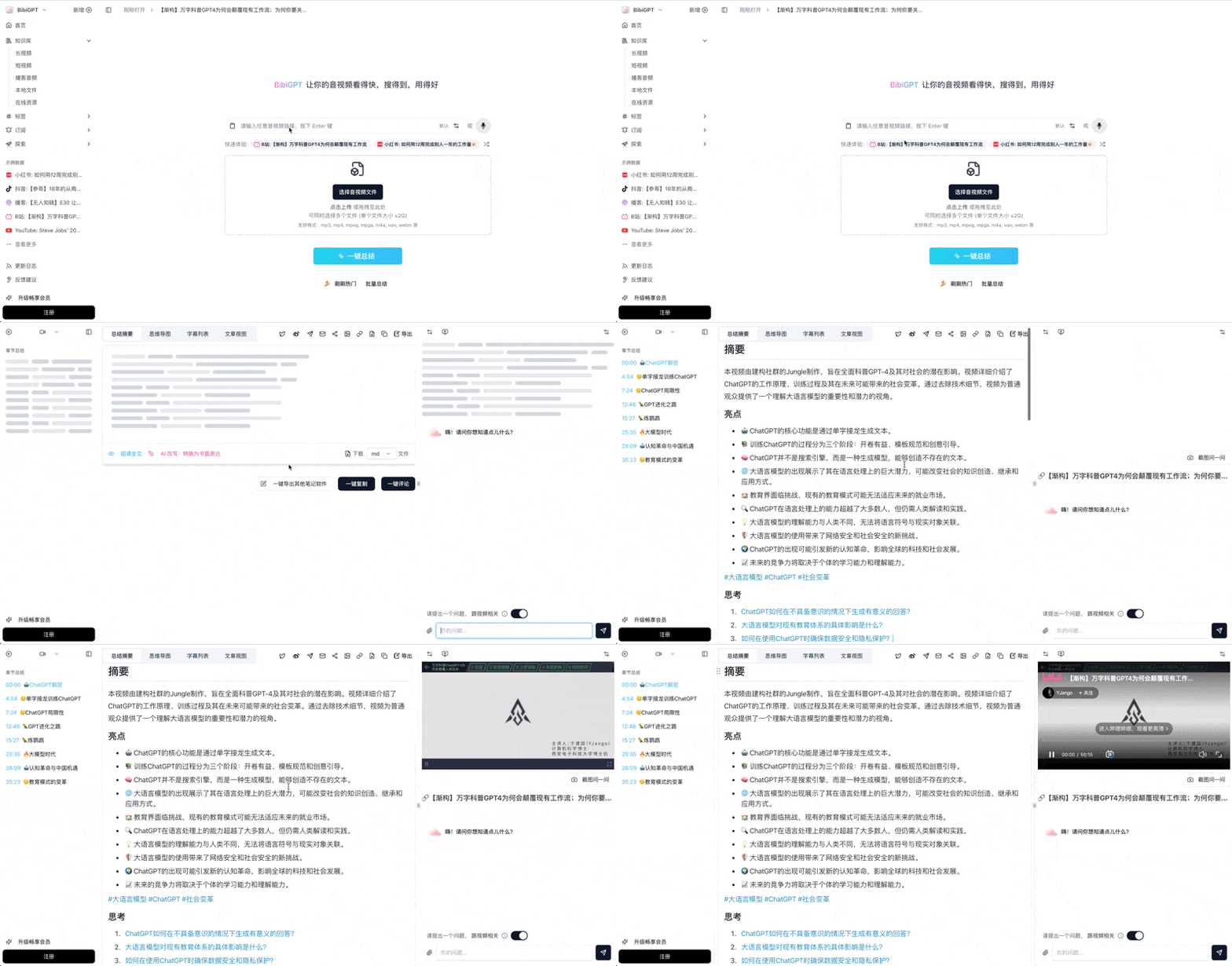
Bilibili: GPT-4 & Workflow Revolution
A deep-dive explainer on how GPT-4 transforms work, covering model internals, training stages, and the societal shift ahead.
Xiaohongshu creators are genuinely excellent. But the platform's design is optimized for "discovery," not "learning." You save a skincare ingredient guide Monday, a retinol tutorial Tuesday, a niacinamide explainer Wednesday — each excellent, none connected.
Cognitive science calls this isolated memory: knowledge stored as disconnected fragments that can't be systematically retrieved when needed. The Feynman Technique's solution is to actively build connections between concepts, not accumulate isolated facts.
BibiGPT provides the right tool combination for this on Xiaohongshu. If you also browse Douyin's knowledge section, the same approach works to combat algorithm-driven fragmentation.
Xiaohongshu Feynman Three Steps: From Fragments to Framework
BibiGPT's three-step Feynman workflow turns Xiaohongshu's fragmentation disadvantage into a systematic learning advantage -- batch collect, AI summarize, deep question.
Step 1: Batch Collect — Multi-Select, One-Click to Collection
Traditional Xiaohongshu learning: scroll → save → forgotten bookmark graveyard.
BibiGPT's approach is different from step one:
- Open BibiGPT Explore page → search a theme keyword (e.g., "skincare ingredients")
- Multi-select all relevant quality videos in the search results
- One-click "Add to Collection" — create a "Skincare Ingredients System Learning" collection
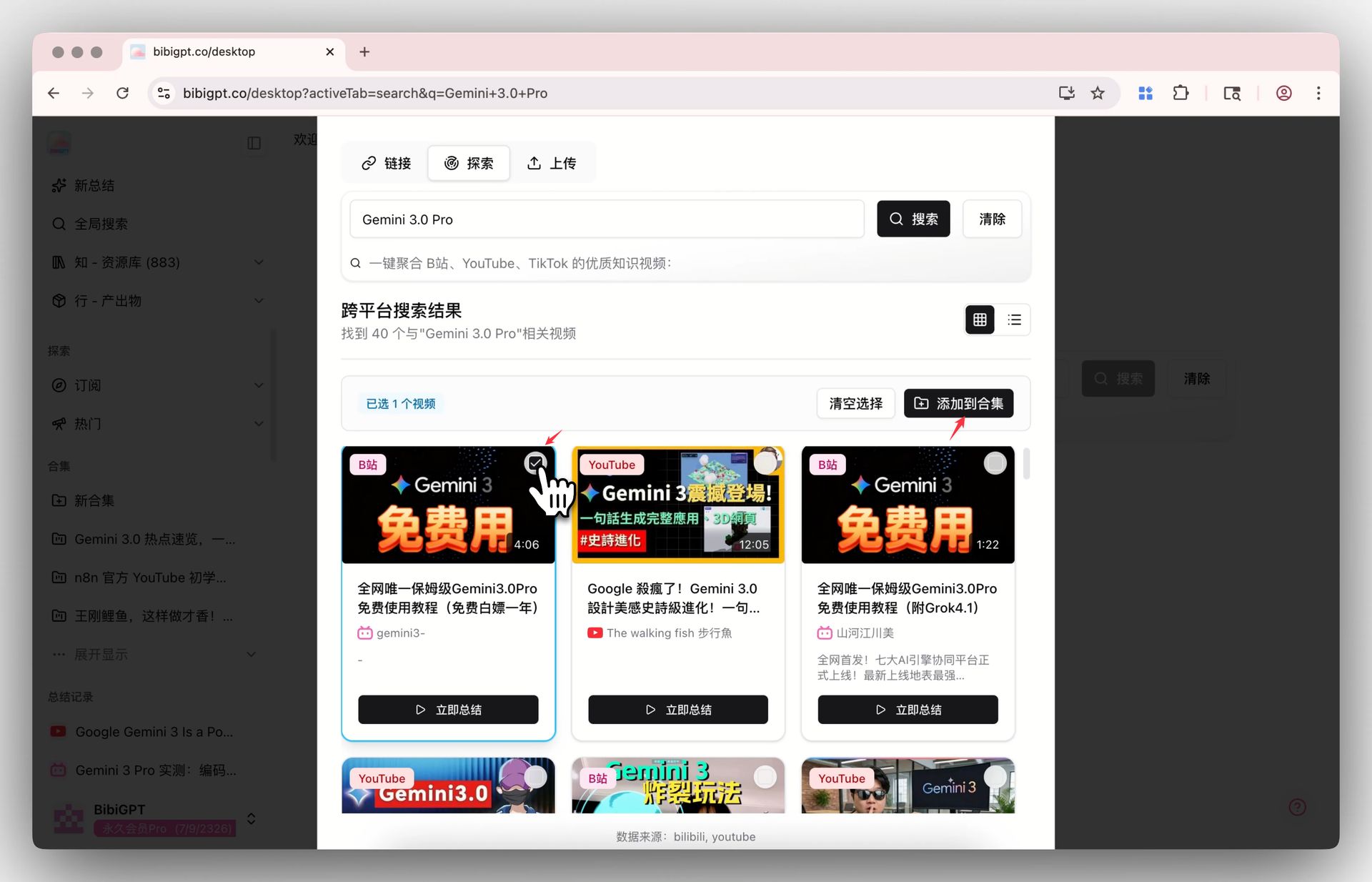 BibiGPT Explore batch add to collection
This changes passive discovery into intentional construction.
Step 2: Global Insight — Collection Summary to See the Full Knowledge Picture
After adding 10 related pieces of content, click "Summarize Now" at the top of the collection page.
BibiGPT's Collection Summary feature:
- Generates a structured synthesis across all content (cross-creator, cross-video overview)
- Each point has clickable citations traceable back to the specific creator and video
- One-click generates a mind map of the entire knowledge domain
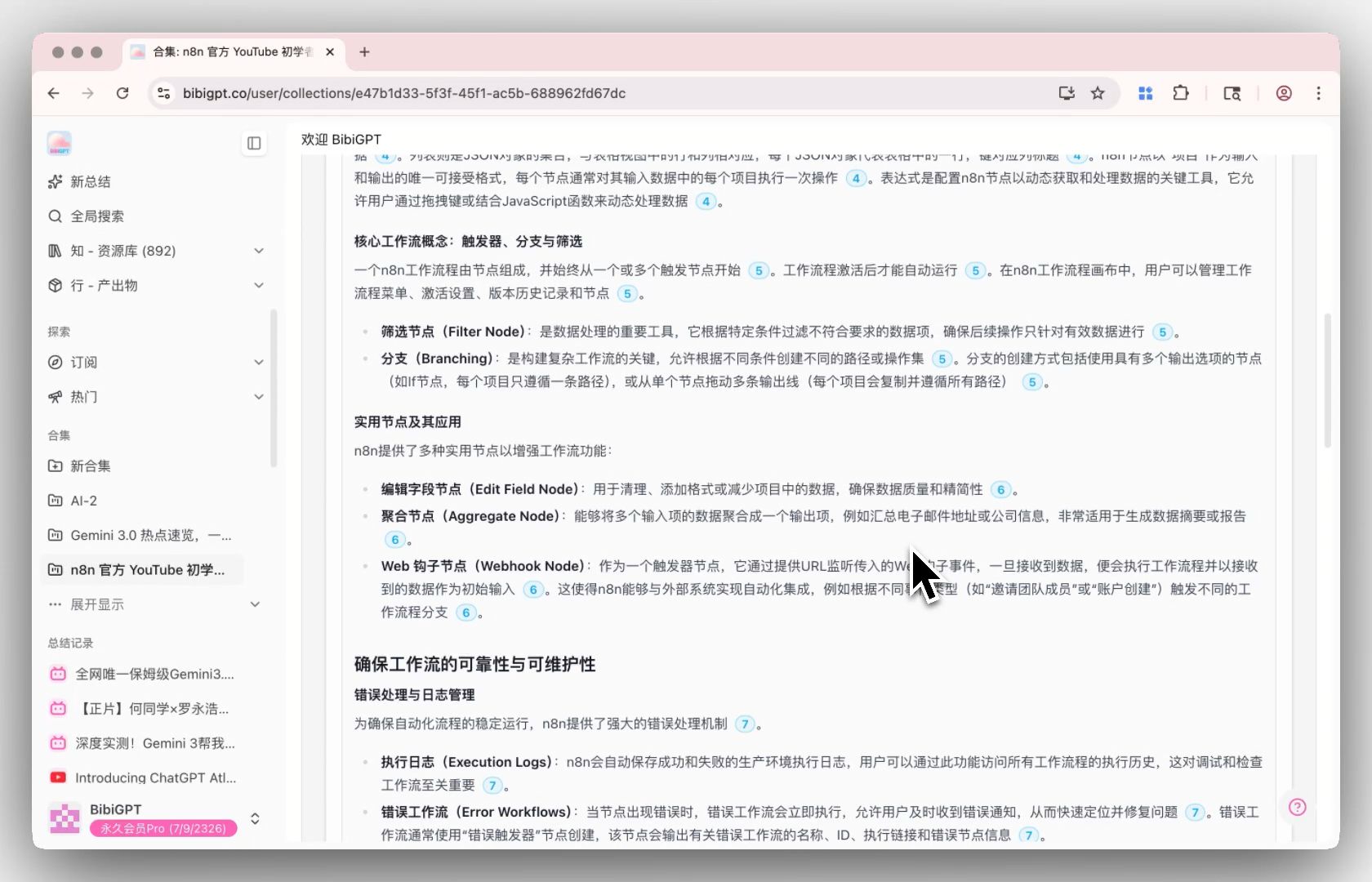 BibiGPT Collection Summary: synthesis text
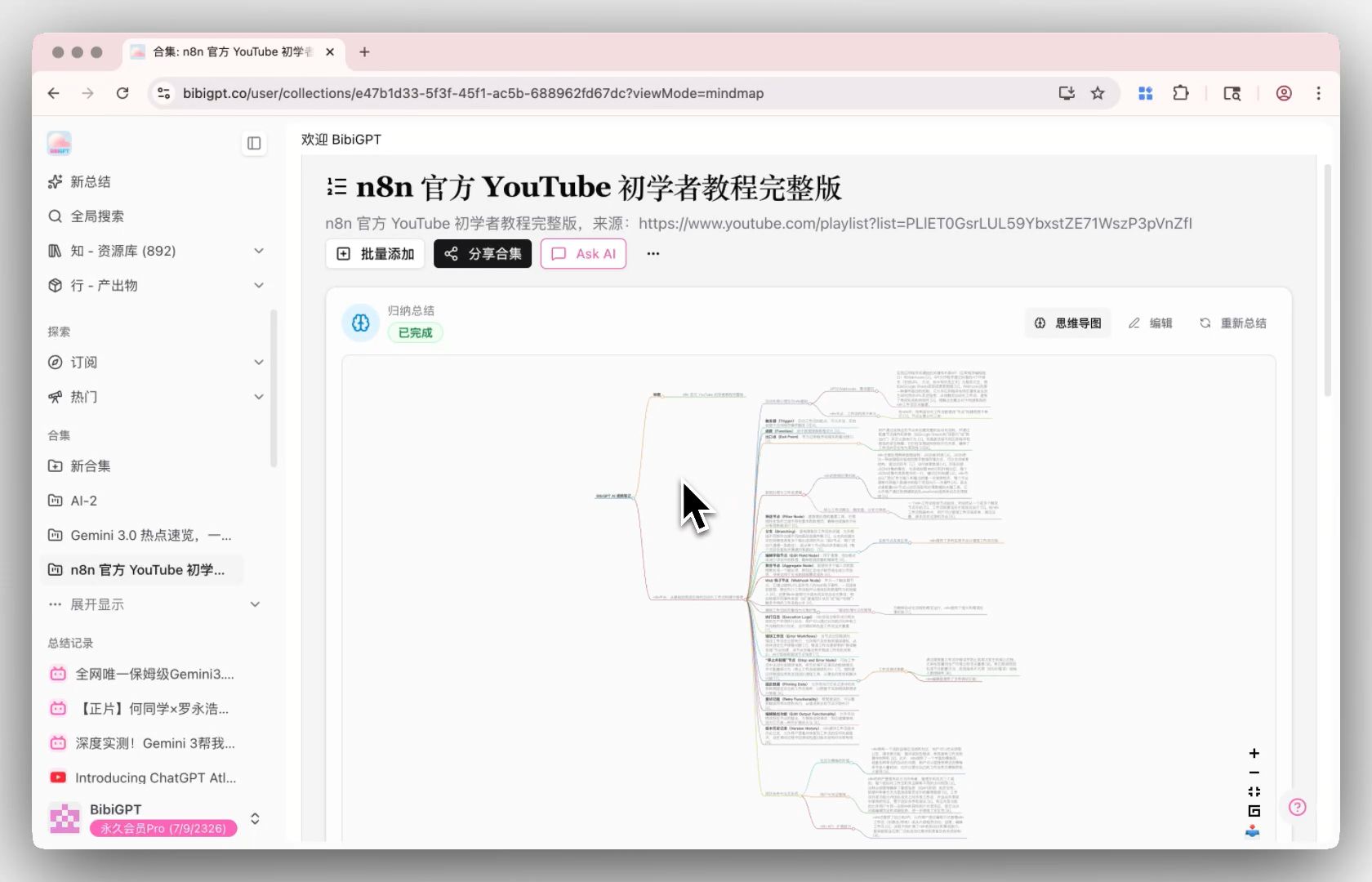 BibiGPT Collection Summary: mind map view
This completes Feynman Step 2 preparation: for the first time, you have a systematic framework to "explain to someone else" — rather than 10 disconnected knowledge fragments.
Step 3: Deep Questioning — Collection AI Chat to Build Cross-Creator Knowledge Graph
Enter Collection AI Chat mode and start the core Feynman exercise:
Question the connections between creators:
- "Do any of these 10 videos disagree on whether Vitamin C and retinol can be used together?"
- "Which creator has the most systematic skincare logic? What's their core framework?"
Question the knowledge structure:
- "How should these skincare ingredients be categorized by function?"
- "If I could only remember 3 core principles about skincare ingredients, what are they?"
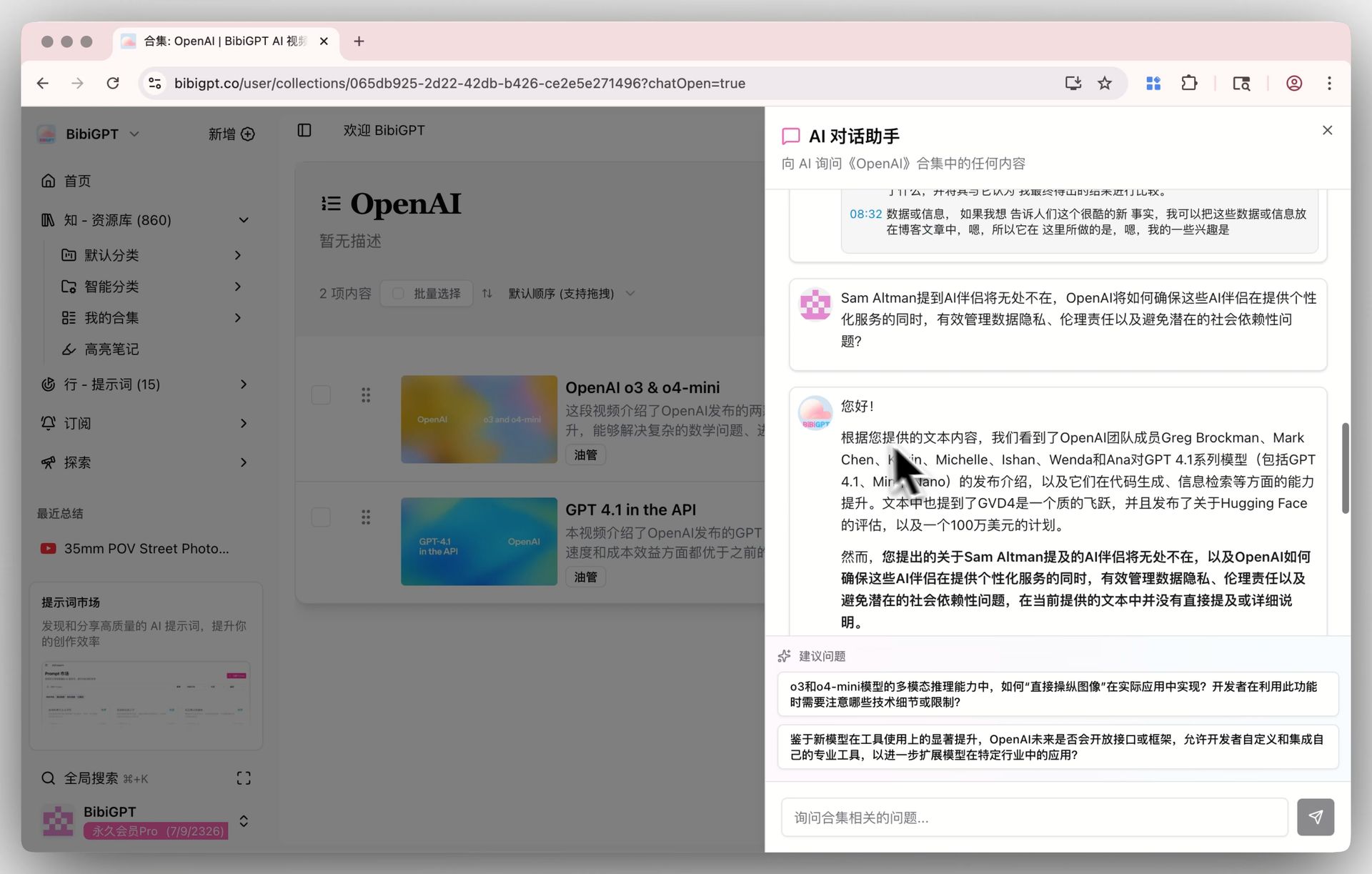 BibiGPT Collection AI Chat: cross-video knowledge questioning
AI integrates all collection content to identify consensus and disagreement across creators — helping you build a truly systematic knowledge framework.
Case Study: 10 Skincare Notes to a Verifiable Cognitive Framework
A real skincare learning case shows the journey from fragmented bookmarks to a teachable cognitive framework -- total time investment: 45 minutes plus one Feynman test.
Initial state: 10 saved skincare ingredient notes on Xiaohongshu, but unable to explain "why" when recommending products to friends.
Day 1 (30 min, build):
- BibiGPT Explore → search "skincare ingredients" → multi-select 10 → add to collection
- Click "Summarize Now" → get structured synthesis covering Vitamin C, retinol, niacinamide, AHAs
- View mind map: understand these fall into 4 categories (antioxidant / anti-aging / brightening / exfoliation)
Day 1 (10 min, find gaps): 4. Ask in Collection AI Chat: "How should Vitamin C and Vitamin A be layered in a routine?" 5. Discover complete inability to answer — knowledge gap identified 6. AI provides multi-creator integrated explanation: morning C, evening A rationale
Day 2 (5 min, iterate): 7. Explain "morning C, evening A" principle to a friend → can explain it clearly 8. Flashcard test: Vitamin C functions, retinol notes for sensitive skin
Ten fragmented notes become a teachable skincare ingredient framework. Feynman test passed.
Want to turn what you learned into shareable Xiaohongshu posts? Try BibiGPT's video-to-Xiaohongshu post feature, or use video-to-illustrated article for longer-form content.
Feynman × BibiGPT Series
- Full Feynman framework: YouTube overview article
- Podcast commute learning: Xiaoyuzhou + 45-minute commute Feynman workflow
- TED Talks: Video-to-article + speech structure extraction
- Bilibili technical series: Anki export + cross-video Q&A
- Douyin: Search-driven learning to replace algorithm recommendations
Frequently Asked Questions
Q1: How is BibiGPT's Collection Summary different from single video summary?
A: Single video summary processes one video at a time. Collection Summary integrates multiple creators' content — AI identifies consensus, disagreements, and complementary perspectives across videos, generating a comprehensive synthesis ideal for systematic topic learning.
Q2: Can BibiGPT process Xiaohongshu content directly?
A: Yes. BibiGPT supports pasting Xiaohongshu video links for instant summaries. You can also search keywords in the Explore page and batch-add results to a collection. For image-text notes, use local file upload to process audio versions.
Q3: What is the Feynman Technique and why pair it with AI tools?
A: The Feynman Technique's core principle is "explain it simply enough to teach someone else" — if you can't explain it clearly, you don't truly understand it. BibiGPT's Collection AI Chat acts as your "virtual student": you can articulate knowledge to it, and it asks follow-up questions and points out logical gaps, helping you quickly identify blind spots.
Try BibiGPT Collection Learning Now
Search → Multi-select → Collection Summary → AI Chat — three steps from fragments to framework
Start your AI-powered learning journey now:
- 🌐 Official Website: https://aitodo.co
- 📱 Mobile Download: https://aitodo.co/app
- 💻 Desktop Download: https://aitodo.co/download/desktop
- ✨ Explore Features: https://aitodo.co/features
BibiGPT Team